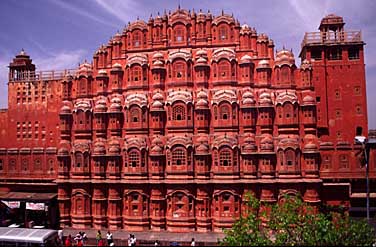
Exploring Hawamahal - Destinations in Rajasthan India
Hawa Mahal
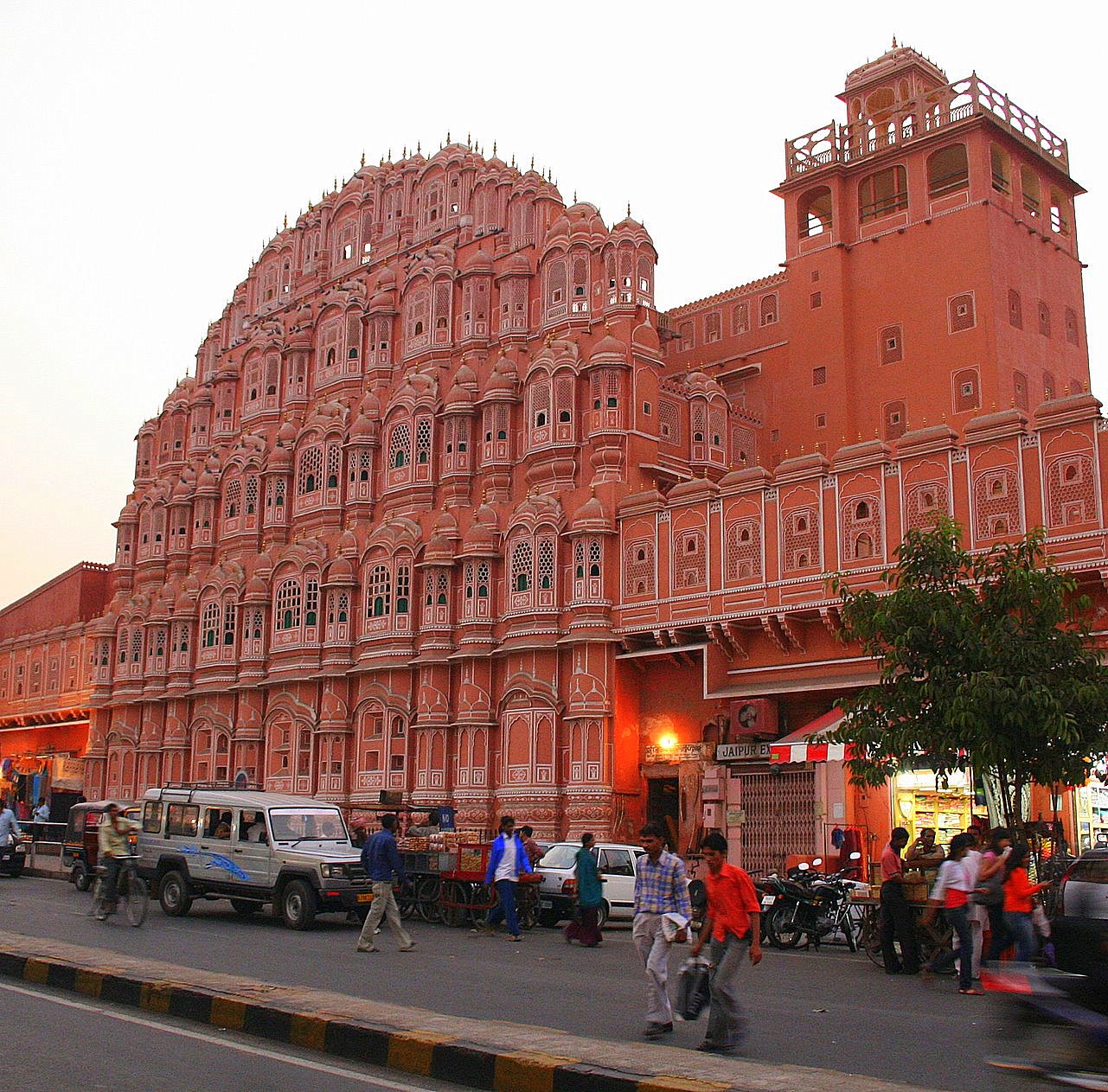
Hawa Mahal (Hindi: हवा महल, translation: "Palace of Winds" or “Palace of the Breeze”), is a palace in Jaipur, India. It was built in 1799 by Maharaja Sawai Pratap Singh, and designed by Lal Chand Usta in the form of the crown of Krishna, the Hindu god. Its unique five-story exterior is also akin to the honeycomb of the beehive with its 953 small windows called jharokhas that are decorated with intricate lattice work.[1] The original intention of the lattice was to allow royal ladies to observe everyday life in the street below without being seen, since they had to observe strict "purdah" (face cover).Built of red and pink sandstone, the palace is situated on the main thoroughfare in the heart of Jaipur’s business centre. It forms part of the City Palace, and extends to the Zenana or women's chambers, the chambers of the harem. It is particularly striking when viewed early in the morning, lit with the golden light of sunrise.
History
Maharaja Sawai Jai Singh the ruler of Rajasthan of the Kachwaha clan, was the original planner and builder who built the Jaipur city in 1727. However, it was his grandson Sawai Pratap Singh, son of Maharaja Sawai Madhosingh I, who built the Hawa Mahal in 1799 as a continuation of the Royal City Palace. Pratap Singh's deep devotion to the Hindu god Lord Krishna is inferred to have prompted him to build it as a dedication, in the form of a Mukuta or headgear, adorning the Lord. Though no historical record is available to its exact history, it is conjectured that Royal family ladies, who were under strict observance of purdah (the practice of preventing women from being seen by men), had to be given opportunity to witness proceedings in the market centre and watch the royal processions and festivities sitting behind the stone carved screens. Hawa Mahal did just that in style, amidst its luxurious comforts and behind strict screened exclusivity, unseen by outsiders.Royal family of Jaipur, during their reign, also used the Mahal as a hot weather retreat, during the suffocating summer season, for several years, since the unusually designed window screens provided the needed cool breeze.
Topics
Plan your visit
A useful journey leaves room for local discoveries. Start with these essentials, then verify operational details from primary sources.
Pick a few nearby cities or landmarks rather than trying to cover a whole state in one short trip.
Compare temperature, rainfall and festival periods for the specific part of the region you will visit.
Include time for food, museums, crafts and the places that matter to local communities.
Confirm transport, permits, accommodation and opening dates directly from reliable sources.
More journeys to discover

Frequently asked questions
What is Hawamahal - Destinations in Rajasthan India known for?
Hawamahal - Destinations in Rajasthan India is explored in this guide through its local heritage, visitor attractions, culture and images. The highlights and linked articles below offer starting points for your itinerary.
How should I plan a first visit to Hawamahal - Destinations in Rajasthan India?
Choose a few nearby highlights in Hawamahal - Destinations in Rajasthan India, group them by area and allow flexibility for travel, meals and rest. Confirm the latest access information with official providers.
When is the best time to visit Hawamahal - Destinations in Rajasthan India?
The most comfortable time depends on local weather, festivals and your planned activities. Check current seasonal forecasts and any attraction-specific closure notices for Hawamahal - Destinations in Rajasthan India.
Where can I confirm ticket prices and opening times in Hawamahal - Destinations in Rajasthan India?
Check the official tourism authority or the individual venue before departure. This page intentionally does not repeat potentially outdated prices or hours.
Is this Hawamahal - Destinations in Rajasthan India guide updated?
This page was rebuilt from legacy IndiaCityTrip content on October 23, 2026. Older descriptive material has been reorganized; operational details still require direct verification.