Exploring Ranthambore National Park
History
The history of Ranthambore is full of historic battles as the first battle was fought in 1301 AD where Rajput King Hamir was defeated by Ala-ud-din Khilji who took control of Ranthambore. Later Akbar captured it in the year 1569 AD and also took control over the fort. Ranthambore was a popular spot for hunting parties that were organized in this region by the erstwhile rulers of the region and later, the British officials. In the year 1955 Ranthambore was established as Sawai Madhopur Game Sanctuary by the efforts of the Indian Government, and in 1973 was declared a Tiger Reserve. It was elevated to the status of a national park in the year 1980. It was in the year 1984 that the neighboring forests were declared the Sawai Man Singh Sanctuary and Keladevi Sanctuary, and in 1991 the tiger reserve was expanded to include Sawai Man Singh and Keladevi sanctuaries as well.
Sightseeing in Ranthambore National Park
The Ranthambore National Park is spread over a vast area of 392 sq km and is one of the most visited among the wildlife sanctuaries of Rajasthan. It features a wide range of exquisite flora and fauna including the bird species like Parakeet, Owl, Woodpecker, Kingfisher, Eagle, Partridge, Hornbill, Cuckoo, Heron, Sparrow, Vulture and Falcon.
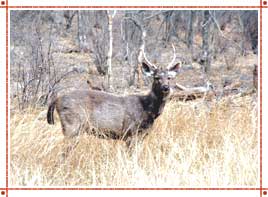
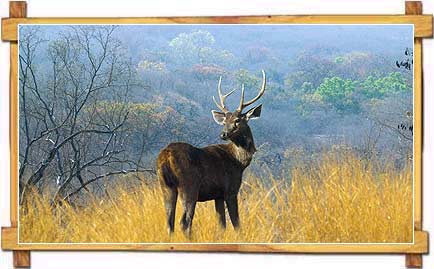
This national Park has a dry deciduous type of vegetation with almost 300 species of avifauna and 30 species of fauna. Dhok is the predominant plantation that can be found growing all over the sanctuary. On a good day, you will encounter several wild animals such as Tigers, Leopards, Striped Hyenas, Sambar deer, Chital, Nilgai, Common or Hanuman langurs, Macaques, Jackals, Jungle cats, Caracals, Sloth bears, Black bucks, Rufoustailed Hare, Indian Wild Boar, Chinkara, Common Palm Civets or Toddy cat, Common Yellow Bats, Desert Cats and Common mongoose. These are the main tourist attractions in Ranthambore and the tourists come here in huge numbers to catch a sight of them.
The embankments of the lakes in the park are dotted with several reptilian and amphibian creatures such as Snub Nosed Marsh Crocodiles, Desert Monitor Lizards, Tortoise, Ganga Soft Shelled Turtles, North Indian Flap Shelled Turtles, The rocky regions of the park are strewn with a considerable number of Banded Kraits, Cobras, Common Kraits, Indian Pythons, Rat Snakes, Russel's Vipers, Saw-scaled Vipers and the Indian Chameleon.
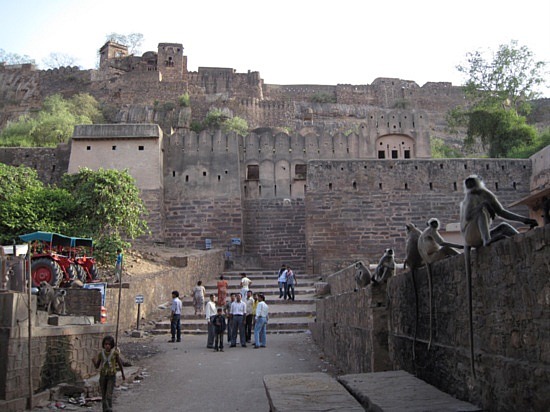
Ranthambore is highly acclaimed for the remarkable Ranthambore fort as well. The Chauhan rulers built it in the 10th century and it is regarded as one of the oldest forts of Rajasthan. This fort was perfect to keep the enemy at bay and is characterized by temples, tanks, huge gates and massive walls. Some of the other tourist attractions in Ranthambore are the calm lakes that are located here such as Padam Talao, Rajbagh Talao and Malik Talaoand and draw a huge number of animals and birds.
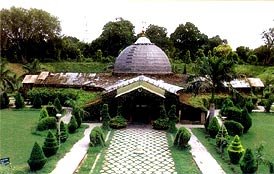
It is also among the major things to watch in Ranthambore and is a forest rest house overlooking the attractive Padam Talab (lake). It is located next to the National Park and offers comprehensive facilities for a comfortable sojourn. There is an ancient banyan tree which is said to be the second largest in the entire country and is the main attraction of this complex.
Padam Talab is the largest lake in the Ranthambore National Park. The lake has been named after the water lilies that grow in the lake in season. It is a good place to see the wild animals in the early hours of the morning and just before sunset.
Kachida Valley is located near the outskirts of the park. Numerous rocky outcrops and low hills make up this place. This area is famous as it consists of a majority of the Panther population of the park, along with a good population of beers.
The most scenic lake in the park is the Raj Bagh Talab. The ruins scattered along the edges of the lake add to its attraction. Numerous animals and birds feeding in the lake are some of the other attractions of the lake. Apart from being a favorite haunt of the Sambhar deer, the areas around the Raj Bagh Talab are also prime tiger spotting areas.
Lakarda & Anantpura lie in the northern and northwestern regions of the park. It is known as the ideal place for spotting Sloth Bears.
Ruins Located between Padam Talab (lake) and the Raj Bagh Talab, Raj Bagh ruins are ancient stone structures like arches, palace outhouses, domes, steps, etc. They serve as a reminder of the bygone era.
How to Reach Ranthambore National Park
Air : Nearest airport is Jaipur (175 kms). Rail: Nearest railhead is Sawai-Madhopur (12 kms) which is on the Bombay - Delhi section of Western Railway. Road: A regular bus service connects Ranthambore to Sawai-Madhopur 12 km, Agra 226 km, Bharatpur 166 km, Delhi 434 km and Jaipur 180 km. Private Horse driven tongas are available at the Railway Station. R.T.D.C. or private jeeps can be hired from Tourist Information Bureau, Sawai-Madhopur.
Useful Information
Entry charges for hired vehicle, guide and photo equipment are separate. These can be reserved at the Project Tiger office in Sawai Madhopur.
Plan your visit
A useful journey leaves room for local discoveries. Start with these essentials, then verify operational details from primary sources.
Reserve any permitted safari or access through the authorized wildlife authority.
Keep a respectful distance, avoid loud noises and never feed or approach wildlife.
Bring neutral clothing, water, suitable sun protection and binoculars if useful.
Check the open season, gate location, guide requirements and changing conservation rules.
Photos and places to remember

More journeys to discover
Frequently asked questions
What is Ranthambore National Park known for?
Ranthambore National Park is explored in this guide through its local heritage, visitor attractions, culture and images. The highlights and linked articles below offer starting points for your itinerary.
How should I plan a first visit to Ranthambore National Park?
Choose a few nearby highlights in Ranthambore National Park, group them by area and allow flexibility for travel, meals and rest. Confirm the latest access information with official providers.
Can I visit Ranthambore National Park throughout the year?
Not necessarily. Wildlife areas can close for monsoon periods, conservation measures or operational reasons. Confirm current permits, zones and visitor seasons directly with park authorities.
Where can I confirm ticket prices and opening times in Ranthambore National Park?
Check the official tourism authority or the individual venue before departure. This page intentionally does not repeat potentially outdated prices or hours.
Is this Ranthambore National Park guide updated?
This page was rebuilt from legacy IndiaCityTrip content on October 23, 2026. Older descriptive material has been reorganized; operational details still require direct verification.