Exploring Ajanta Ellora Caves
Location: From Aurangabad: - Ajanta-100km, Ellora-30km Built in:- Ajanta Caves (200BC to 650AD),Ellora (350AD to 700AD) Discovered By: - John Smith in 1819 Best Time To visit : Anytime of the year
History of Ajanta and Alora Caves
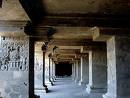
The Ajanta and Ellora caves are two famous tourist destinations in India. These caves are cut out of the rocks, by hand. There are 29 caves at Ajanta and 34 caves at Ellora. These caves were founded by John Smith a British Army Officer in 1819 while he was on hunting expedition. Ajanta has been designated as World heritage site. The Ajanta Caves are the perfect example of the brilliance of the Buddhist art and architecture. The Ajanta Caves stand for the entire evolution of the Buddhist architecture. The caves were cut out of the volcanic lava of the Deccan. The caves are in a wooded and rugged horseshoe-shaped ravine about 3½ km from the village of Ajanta.
The Buddhist architecture at Ajanta comprises of two forms - the Chaitya or prayer hall and the Vihara or monastery. Out of the total of 30 caves, 5 are prayer halls while the remaining 25 are monasteries. The construction of the caves can be divided into two phases - the Hinayana Phase and the Mahayana Phase. The Hinayana Phase includes 2 chaitya halls and 4 viharas while the Mahayana Phase has 3 chaityas and 11 viharas.
Ajanta Caves
CAVE 1: The design pattern on the doorways of the caves seems to be derived from the doorways of other temples in India. There are many auspicious motifs on the doorways of the cave.
Great Buddha Image, Goddess, Cherubic Dwarf, The Bodhisattva, Four Deer with a common Head, Bodhisattva Padmapani, Vajrapani, The Lovers, Dark Princess, Dancing Girl, Princess Reclining By a Pillar, A maid in a sad Mood, Persian Embassy, The Golden Geese, Pink Elephant, Bull Fight.
CAVE 2: The walls of the Cave 2 show the painting of Thousand Buddha’s, it is a large painting. Women on a Swing: The rhythmic movement of the princess starting off the movement on the swing is on the wall of the right hand corridor. The innocent face and the bursting youth of the girl, shows the change Buddhist idea of the 5th century A.D. that physical vitality itself leads ultimately to illumination.
CAVE 4: The making of Cave 4 has begun at the time of cave 17, but it was not completed, because there are some faults in the rocks. There are large unfinished Buddha images. There is a goddess at the upper left corner of the entrance of the doorway with a flowering tree above her.
CAVE 5: The only feature of this cave is that it is having a T-shaped doorway.
CAVE 6: This was the first important cave of the Mahayana phase. There is a central pillar in this cave. There is a Buddha image in this cave; sitting with his feet squat on the base, in a rigid pose, only enlivened by the gestures of his hand and the flying couples above him. The doorway is simple with not having any special decoration. CAVE 9: This cave has a Chaitya gathering hall. There are two early paintings, Frieze of Animals and Herdsmen, Naga Worshippers, Giant Horseshoe Window
CAVE 10: This is of about the same time as cave 9. It has a similar shape. The large chaitya gathering hall is 28.5m X 12.3m wide and 11m high. It has a stupa shrine at the ambulating passage around the symbolic stupa. The paintings of this cave include: King with his Retinue, Shad-Danta-Jataka, Elephantas in Jungle, Princess and Tusk,The Buddhisattva on the Pillar, Buddha and the One-eyed Monk, Shyama Jataka.
CAVE 11: The Buddha in the Cave 11 is one of the earlist images of Ajanta. The important fact about this Buddha is that it is attached to a stupa. This means a compromise between stupa worship and image worship. This cave is interesting, because it shows the transition from the earlier Hinayana to the later Mahayana Buddhist phase of worship. The round stupa has the images of the Buddha to its bare girth.
CAVE 16: This cave contains two Goddesses standing on neatly carved pillars. This cave gives a good view of the ravine. From the large verandha we enter a hall. There are six cells on each side. Giant Statue, Dying Princess, Buddha with a Beginning Bowl, Prince Sidharth Stretching the Bow, The decent of the Buddha, The Sutasama Jataka.
CAVE 17: This cave is similar to that of cave 16. The plan of this cave is simple and severe. The pillars in both the porch and interior are arranged in a strict order. All the pillars were painted. The Buddha in the shrine is seated in the Yogasana. His hands are held in the Dharmachakra mudra, or teaching gesture. The paintings in this cave are: Apsaras and Flying Spirits, Indra and the Apsaras, Royal Procession, Shad-Danta Jataka, Prince Simhala, The Buddha Returns.
CAVE 18: The Ajanta masters have shown human life in all its varied colors. One of the scenes, always preferred in Indian painting, has been of sringar, showing the decoration by the women of her body. The most important painting is a princess is looking at her mirror. One of her female attendants holds a tray of toilet utensils. The other holds a flywhisk in her hand.
Plan your visit
A useful journey leaves room for local discoveries. Start with these essentials, then verify operational details from primary sources.
Read about the builders, timeline and local significance before arriving. On-site interpretations may add depth.
Follow monument rules, restricted-area signage and any photography restrictions.
Carry water, plan for changing weather and consider whether guided interpretation would add value.
Check the heritage authority for current ticket rates, last entry times and closures.
Photos and places to remember
More journeys to discover
Frequently asked questions
What is Ajanta Ellora Caves known for?
Ajanta Ellora Caves is explored in this guide through its local heritage, visitor attractions, culture and images. The highlights and linked articles below offer starting points for your itinerary.
How should I plan a first visit to Ajanta Ellora Caves?
Choose a few nearby highlights in Ajanta Ellora Caves, group them by area and allow flexibility for travel, meals and rest. Confirm the latest access information with official providers.
When is the best time to visit Ajanta Ellora Caves?
The most comfortable time depends on local weather, festivals and your planned activities. Check current seasonal forecasts and any attraction-specific closure notices for Ajanta Ellora Caves.
Where can I confirm ticket prices and opening times in Ajanta Ellora Caves?
Check the official tourism authority or the individual venue before departure. This page intentionally does not repeat potentially outdated prices or hours.
Is this Ajanta Ellora Caves guide updated?
This page was rebuilt from legacy IndiaCityTrip content on October 23, 2026. Older descriptive material has been reorganized; operational details still require direct verification.