Exploring Bhagwan Mahavir Wildlife Sanctuary
History of Bhagwan Mahavir Wildlife Sanctuary
PantherThough more famous for its picturesque and happening beaches, Goa is also home to some of the most amazing wildlife. Situated just 65 km from the state capital Panaji, Bhagwan Mahavir Wildlife Sanctuary is a lush stretch of evergreen forests that provide habitat to a variety of animal and bird species. The park was formerly known as Mollem Game Sanctuary until a few years back when it was named Bhagwan Mahavir Wildlife Sanctuary with an area of 240 sq. km designated as protective.
The vegetation consists mainly of evergreen forests, tropical evergreen forests and moist deciduous forests with the major tree species being xylia, lagerstromia and terminalia. The grass is thick though not very well spread over the entire region.
Wildlife Attractions at Bhagwan Mahavir Wildlife Sanctuary
A variety of animals and birds have found habitat at the sanctuary. While strolling around the region, you are most likely to come across such animals as leopard cat, mouse deer, barking deer, wild boar, sambhar, bonnet macaque, civet, malabar giant squirrel, slender lorin, panther, jungle cat, spotted deer, gaur, wild dog, porcupine, common langur, flying squirrel, pangolin and some other rare animals.
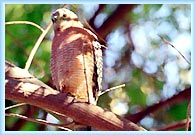
Bhagwan Mahavir Wildlife Sanctuary also offers excellent opportunities for bird watchers and ornithologists. With an estimated number of 200 bird species, the park is the proud abode of such beautiful avians as the black woodpecker, Indian hornbill, fairy bluebird, emerald dove, wag tail, kingfisher, barbet and shrike. Watchtowers located near the water holes are excellent spots from where you can catch a glimpse of these birds and animals.
Sightseeing in Bhagwan Mahavir Wildlife Sanctuary
This small but exquisite 12th century Shiva temple of the lord Mahadeva is an active place or worship, located 13 km east of Bolcornem village, past the end of a single lane paved road in the northern region of the park. The temple consists of garbhagriha, antarala and a pillared Nandi mandapa built of basalt. The four pillars, embellished with intricate carvings of elephants and chains support a stone ceiling decorated with finely carved lotus flowers of the Ashtoken variety.
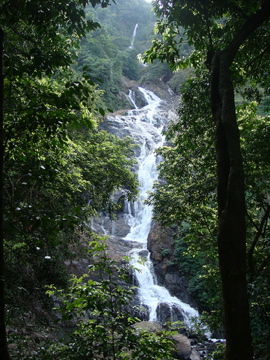
Dudhsagar Falls (literally Ocean of milk) is a tiered waterfall located high up on the Mandovi River, at the Karnaraka border in the southwest part of the park, 10 km upstream from Collem village. At 310 m, It is Goa's tallest waterfall, India's 5th tallest, and is 227th in the world [7] An Aqueduct of the South Central Railways passes spectacularily through the waterfalls. This popular destination may be reached by hiking along the 10 km one lane dirt road or hiring a 4 wheel drive vehicle at Collem. Access is dangerous and restricted during the monsoon season of June and July.
This is an eerie canyon of water carved crevises downstream from Dudh Sagar Falls, created from solid rock by serpentine underwater currents. It is just off the main trail soon past the Collem entry point.
This waterfall, located about 2 km southwest of Tambdi Surla, at the Karnataka border, is equally spectacular and only slightly less tall than Dudsagar Falls, however it is rarely visited because of its difficult access by a steep, winding and irregular rocky path. A local guide is required.
How To Reach Bhagwan Mahavir Wildlife Sanctuary
By Air : Dabolim, located at a distance of just 80 km from the sanctuary, is the nearest airport. Dabolim is well connected with other major cities in India as well as a few international destinations.
By Rail : The nearest railhead is located at Colem, just 6 km from the entry gates of the sanctuary. From here, you can take any of the local means of transport and reach the sanctuary.
By Road : State transport buses connect the region with all the major neighbouring cities through regular services. Another option is to hire a taxi from the nearby cities.
* The sanctuary remains open from 8 AM to 5 PM everyday.
* Other nearby places of tourist interest include the Dudhsagar waterfall, Devil's Canyon, Tambdi Surlaand and Eco-tourism wing.
Plan your visit
A useful journey leaves room for local discoveries. Start with these essentials, then verify operational details from primary sources.
Reserve any permitted safari or access through the authorized wildlife authority.
Keep a respectful distance, avoid loud noises and never feed or approach wildlife.
Bring neutral clothing, water, suitable sun protection and binoculars if useful.
Check the open season, gate location, guide requirements and changing conservation rules.
Photos and places to remember

More journeys to discover
Frequently asked questions
What is Bhagwan Mahavir Wildlife Sanctuary known for?
Bhagwan Mahavir Wildlife Sanctuary is explored in this guide through its local heritage, visitor attractions, culture and images. The highlights and linked articles below offer starting points for your itinerary.
How should I plan a first visit to Bhagwan Mahavir Wildlife Sanctuary?
Choose a few nearby highlights in Bhagwan Mahavir Wildlife Sanctuary, group them by area and allow flexibility for travel, meals and rest. Confirm the latest access information with official providers.
Can I visit Bhagwan Mahavir Wildlife Sanctuary throughout the year?
Not necessarily. Wildlife areas can close for monsoon periods, conservation measures or operational reasons. Confirm current permits, zones and visitor seasons directly with park authorities.
Where can I confirm ticket prices and opening times in Bhagwan Mahavir Wildlife Sanctuary?
Check the official tourism authority or the individual venue before departure. This page intentionally does not repeat potentially outdated prices or hours.
Is this Bhagwan Mahavir Wildlife Sanctuary guide updated?
This page was rebuilt from legacy IndiaCityTrip content on October 23, 2026. Older descriptive material has been reorganized; operational details still require direct verification.