Exploring Dudhwa National Park
History of Dudhwa National Park
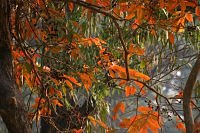
From mosaic grasslands and dense sal forests to swampy marshes, the terrain of Dudhwa National Park is as diverse as the wildlife population it harbors. While the northern edge of the Park lies along the Indo-Nepal border, the River Suheli marks the southern boundary.
A Tiger Reserve since 1879, Dudhwa became a National Park in 1977 and adopted the Project Tiger in 1988. Although the Tigers at the Park are numerous, sightings are rare due to the thick forest cover of the area. Besides Tigers, Leopards, Hispid Hares, Swamp Deer (Barasingha) and Rhinos thrive amidst the vegetation.
Sightseeing in Dudhwa National Park
Dudhwa Tiger Reserve lies on the India-Nepal border in the foothills of the Himalaya and the plains of the 'terai'. The park is spread over an area of around 811 sq. kms of marshes, grasslands and dense forests. The main attractions of the park are its Swamp Deer (population over 1,600) and tiger (population 98 in 1995). It is a home for over 38 species of mammals, 16 species of reptiles and numerous species of birds. It has two core areas: Dudhwa National Park and Kishanpur wildlife sanctuary. They are 15 kms. apart with agricultural land between them. The park is famous for the untiring efforts of 'Billy' Arjan Singh, one of India's leading conservationists, who was instrumental in the creation of Dudhwa as a sanctuary of the Swamp Deer. Later he successfully hand-reared and re-introduced zoo-born Tigers and Leopards into the wilds of Dudhwa.
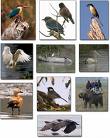
The forests here are reminiscent of the forests of Bardia on the Nepal side, with huge Sal trees, tall termite mounds, patches of riverine forests and large open grasslands. Its lakes offer excellent opportunities for observing Swamp Deer and birds from 'machans'. In the mid 1980s, Indian Rhinoceros was reintroduced into Dudhwa from Assam and Nepal. The park has a rich bird life, with over 350 species, including the Swamp Partridge, Slaty-backed Woodpecker and Bengal Florican.
Excursion(Dudhwa Tiger Reserve)
En route to Dudhwa, the unique Frog Temple at Oyal can also be visited. The only one of its kind in India, it was built by the former Maharajas of the Oyal state in the district of Lakhimpur-Kheri. Dedicated to Lord Shiva, the base of the stone temple is built in the shape of a large frog. The temple is at a distance of 10 km from Hargaon on the route to Lakhimpur-Kheri and Dudhwa.
Built in the Indo-Saracenic style by the rulers of the Singhai state, Surat Bhawan Palace is one of the famous palaces of the Terai area. Not far from the Dudhwa Tiger Reserve on the Lakhimpur-Nighasan-Dudhwa route, the palace is set in a large green, nine-acre retreat. Expanses of lush lawns, fountains, a swimming pool and interesting architectural details make a visit to the palace worthwhile.
Flora in Dudhwa National Park
Sal Shorea robusta, asna Terminalia tomentosa, shisham Dalbergia sissoo, bahera Terminalia balerica, khair Acacia catechu, jamun Syzygium cumini.
Main Fauna in Dudhwa National Park
Mammals: Tiger, leopard, swamp deer, rhinoceros, chital, hog deer, barking deer, sambar, wild boar and ratel. Birds: Around 400 species including Bengal Florican, Black-necked Stork identified. Fish: 90 species of fishes identified. Endangered Species : Tiger, swamp deer, leopard, ratel, hispid hare, Bengal Florican, Black-necked Stork.
How to Reach Dudhwa National Park
By Air: Lucknow is the nearest airport. Many airlines operate a number of flights to Lucknow from major cities across India. Outside India, Nepal at a distance of 35 kms is the nearest airport.
By Rail: The nearest railheads are Dudhwa (4 kms), Palia (10 kms) and Mailani (37 kms), though the most convenient way would be to travel to Lucknow and then reach Dudhwa by road or train.
By Road: Bus services link Palia to towns such as Lakhimpur Kheri, Shahjahanpur, Lucknow, Bareilly and Delhi. You can get regular buses between Palia and Dudhwa.
* Park timings are from 7 to 10 AM and 3 to 6 PM.
* The best point to start your park trip is at the Dudhwa Forest Office, where you can get information from the foresters about everything ranging from accommodation to safaris.The entire park is administratively divided into nine ranges of which only Sathiana, Bankati, Sonaripur, Salukhapur, Belrayan and Kila have accommodation facilities.
* A library at the Dudhwa office provides information about the park. A nature shop located near by sells books and other souvenirs.
Plan your visit
A useful journey leaves room for local discoveries. Start with these essentials, then verify operational details from primary sources.
Reserve any permitted safari or access through the authorized wildlife authority.
Keep a respectful distance, avoid loud noises and never feed or approach wildlife.
Bring neutral clothing, water, suitable sun protection and binoculars if useful.
Check the open season, gate location, guide requirements and changing conservation rules.
Photos and places to remember
More journeys to discover

Frequently asked questions
What is Dudhwa National Park known for?
Dudhwa National Park is explored in this guide through its local heritage, visitor attractions, culture and images. The highlights and linked articles below offer starting points for your itinerary.
How should I plan a first visit to Dudhwa National Park?
Choose a few nearby highlights in Dudhwa National Park, group them by area and allow flexibility for travel, meals and rest. Confirm the latest access information with official providers.
Can I visit Dudhwa National Park throughout the year?
Not necessarily. Wildlife areas can close for monsoon periods, conservation measures or operational reasons. Confirm current permits, zones and visitor seasons directly with park authorities.
Where can I confirm ticket prices and opening times in Dudhwa National Park?
Check the official tourism authority or the individual venue before departure. This page intentionally does not repeat potentially outdated prices or hours.
Is this Dudhwa National Park guide updated?
This page was rebuilt from legacy IndiaCityTrip content on October 23, 2026. Older descriptive material has been reorganized; operational details still require direct verification.