Overview
Ujjain is situated on the western side of Madhya Pradesh and is recognized as one of the most important holy cities in India. Known in ancient times as Ujjayini, it is often referred to as the "Greenwich of India". The city was once a major center for mathematical and astronomical research, home to legendary scholars like Brahmagupta and Varahamihira.
History & Heritage
Ujjain's history is ancient; it served as the residence of Ashoka when he was viceroy of the Maurya Empire's western provinces. It is also the traditional capital of King Vikramaditya, whose court flourished with the "nine jewels" of Sanskrit literature, including the poet Kalidas.
The city was the headquarters of the Maratha leader Sindhia in the late 18th century before becoming part of Gwalior state. Following Indian independence, Ujjain eventually became a part of Madhya Pradesh in 1956.
Sacred Attractions
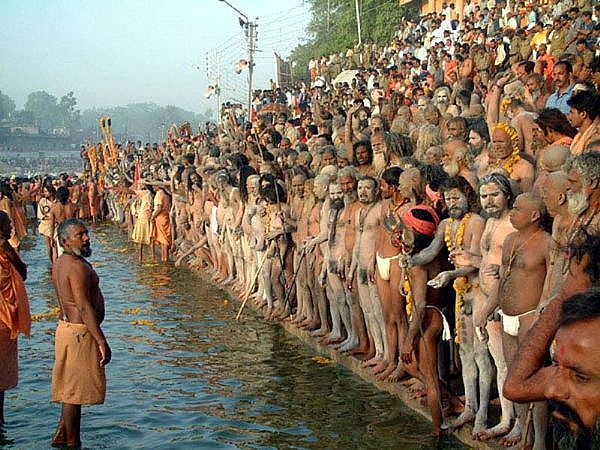
Maha Kumbh Mela
Held every twelve years on the banks of the sacred Shipra River. Pilgrims and sadhus gather in overwhelming numbers for the magnificent bathing rituals.
Mahakaleshwar Temple
Dedicated to Lord Shiva, this temple houses one of the 12 sacred Jyotirlingas. The structure is divided into five levels, including an underground section lit by brass lamps.
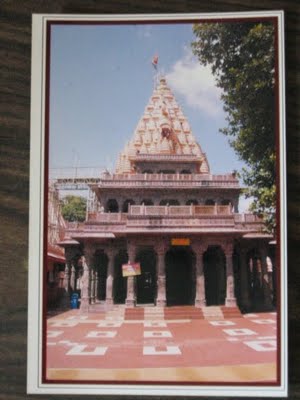
Bade Ganeshji Ka Mandir
Home to one of the largest statues of Lord Ganesha in India. It also features a unique Panchmukhi image of Lord Hanuman.
Bhartrihari Caves
Named after the scholar-poet Bhartrihari, the step-brother of King Vikramaditya, who meditated here after renouncing worldly possessions.
Cultural Landmarks
-
Vikram Kirti Mandir: A cultural center featuring the Scindia Oriental Research Institute with over 18,000 rare manuscripts.
-
Kailadeh Palace: Built by Mandu Rulers in 1458 on an island in the Shipra river using Persian architecture.