City Profile
Historical Evolution
Vadodara's history dates back to 812 AD, beginning as a small settlement. Over the centuries, the city witnessed shifts in power from Hindu kings to the Delhi Sultanate in 1297, followed by the Gujarat Sultans and the Mughals.
The Maratha rulers ascended the throne in 1735 after defeating the Gujarat Sultans, ruling until India's independence in 1947. Among them, Maharaja Sayaji Rao III is hailed as a visionary who introduced civic reforms and established major judicial and educational institutions.
Post-independence, Vadodara emerged as a major industrial hub, particularly for the glass and pharmaceutical sectors, while maintaining its reputation for academic excellence.
Architectural & Cultural Wonders
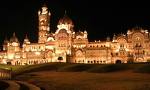
Laxmi Vilas Palace
Built by Maharaja Sayaji Rao III in the Indo-Saracenic style, this palace is among the most magnificent in the city. Its floors are crafted from pristine white marble, and the interiors are replete with exquisite artifacts and relics.
EME (Dakshinamurthy) Temple
Famous for its unique geodesic architecture, this holy shrine dedicated to Lord Shiva represents five religions: Hinduism, Christianity, Islam, Buddhism, and Jainism. It is set amidst lush greenery and encircled by five banyan trees.

Baroda Museum & Art Gallery
This institution houses a rich collection of sculptures, Tibetan art, and Mughal miniatures. Notable exhibits include an Egyptian mummy, the skeleton of a blue whale, and 5th-century Akota bronzes.
Parks & Palaces
Sayaji Bagh (Kamati Baug)
A massive complex featuring an art gallery, zoo, museums, and a toy train. Its well-maintained lawns and gardens are highly admired.
Makarpura Palace
Designed in an elegant Italian style, this historic building is now utilized as a training school for the Indian Air Force.
Other key sites include the Kirti Mandir (royal mausoleum of the Gaekwads), the Lehripura Gate (built in 1558), and the Khanderao Market.